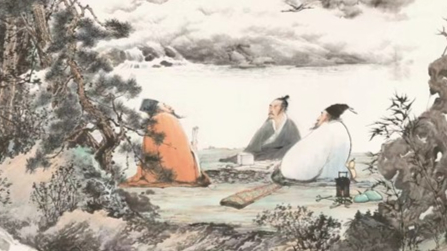
Eight Great Prose Masters of the Tang and Song Dynasties
Introduction
The Eight Great Prose Masters of the Tang and Song Dynasties represent a group of eight influential Chinese writers from the Tang (618–907) and Song (960–1279) dynasties. Celebrated for their mastery of classical Chinese prose, these writers were pivotal in shaping the literary traditions of their time. Their works, distinguished by clarity, elegance, and depth, marked a departure from the ornate and often overly rhetorical styles prevalent in earlier periods. They championed the New Classical Prose Movement, advocating for the use of prose as a medium for clear and effective communication, rather than merely as a vehicle for elaborate ornamentation. The eight masters are Han Yu, Liu Zongyuan, Ouyang Xiu, Su Xun, Su Shi, Su Zhe, Wang Anshi, and Zeng Gong. Their collective contributions to literature have left an enduring mark on Chinese culture and continue to be celebrated and studied to this day.
Historical Background
The Tang and Song dynasties were periods of remarkable cultural, intellectual, and artistic flourishing in Chinese history. During these eras, prose writing underwent significant transformations, largely influenced by the socio-political and philosophical currents of the time. The Tang Dynasty, often considered China's "Golden Age," witnessed the rise of Confucianism, Buddhism, and Taoism as dominant intellectual forces. These philosophies profoundly influenced the literary output of the period, including the works of Han Yu and Liu Zongyuan, who sought to revive Confucian ideals through their writings.
The Song Dynasty, on the other hand, was characterized by a resurgence of Confucian thought, known as Neo-Confucianism, which synthesized Confucian, Buddhist, and Daoist ideas. This intellectual movement provided fertile ground for the development of prose as a medium for philosophical and moral discourse. Writers such as Ouyang Xiu, Su Shi, and Zeng Gong were instrumental in this literary renaissance, using their works to explore themes of governance, ethics, and human nature.
The New Classical Prose Movement, initiated by Han Yu and Liu Zongyuan during the Tang Dynasty, aimed to reform the prevailing literary style, which had become overly ornate and detached from practical concerns. This movement gained momentum in the Song Dynasty, with writers like Ouyang Xiu and Su Shi further refining and popularizing its principles. The Eight Great Prose Masters were at the forefront of this literary revolution, producing works that combined intellectual rigor with stylistic elegance, thereby setting new standards for Chinese prose.
Members of the Eight Great Prose Masters
Han Yu
Han Yu (768–824) was a prominent writer, philosopher, and politician of the Tang Dynasty, often regarded as the leading figure of the New Classical Prose Movement. His writings are characterized by their clarity, directness, and moral earnestness. A staunch advocate of Confucianism, he sought to restore its primacy in Chinese society, which he believed had been undermined by the growing influence of Buddhism and Daoism. His famous essay "On the Way" (《原道》) is a manifesto for Confucian values and a critique of other philosophical traditions. Han Yu's prose style, marked by its simplicity and forcefulness, profoundly influenced subsequent generations of writers.
Liu Zongyuan
Liu Zongyuan (773–819), a contemporary and close associate of Han Yu, was another key figure in the New Classical Prose Movement. Known for his essays, poems, and philosophical writings, Liu Zongyuan's works often reflect his deep engagement with nature and his contemplative outlook on life. His essays, such as "The Small Stone Pond" (《小石潭记》), are celebrated for their vivid descriptions and lyrical quality. Despite political setbacks, including exile to remote regions, Liu Zongyuan remained committed to his literary and philosophical pursuits, leaving behind a rich legacy of prose and poetry.
Ouyang Xiu
Ouyang Xiu (1007–1072) was a leading scholar, historian, and statesman of the Northern Song Dynasty. His contributions to literature and historiography are immense, and he is often credited with revitalizing the New Classical Prose Movement during the Song Dynasty. Ouyang Xiu's essays are noted for their elegance, wit, and intellectual depth. He also played a crucial role in compiling historical records, such as the "New History of the Tang Dynasty" (《新唐书》). A versatile figure, Ouyang Xiu also achieved acclaim as a poet and calligrapher.
Su Xun
Su Xun (1009–1066) was a prominent essayist and the father of Su Shi and Su Zhe, two other members of the Eight Great Prose Masters. Despite beginning his literary career relatively late in life, Su Xun quickly gained recognition for his incisive and well-argued essays. His works often delve into historical and philosophical themes, reflecting his deep understanding of Confucian principles. Su Xun's prose is characterized by its clarity, logical structure, and persuasive power.
Su Shi
Su Shi (1037–1101), also known as Su Dongpo, is one of the most celebrated figures in Chinese literary history. A polymath, Su Shi excelled in poetry, prose, calligraphy, and painting. His essays are renowned for their eloquence, insight, and humanistic spirit. Su Shi's literary output reflects his wide-ranging interests, from philosophy and politics to art and nature. Despite facing political persecution and exile, Su Shi remained a prolific writer, producing works that continue to inspire readers and scholars.
Su Zhe
Su Zhe (1039–1112), the younger brother of Su Shi, was a distinguished writer and scholar in his own right. Like his father and brother, Su Zhe was deeply influenced by Confucian thought, which is evident in his essays and other writings. His works are noted for their precision, clarity, and moral integrity. Su Zhe's contributions further solidified the literary legacy of the Su family within the New Classical Prose Movement.
Wang Anshi
Wang Anshi (1021–1086) was a prominent statesman, reformer, and writer of the Northern Song Dynasty. As a key figure in the Qingli Reforms, Wang Anshi sought to address social and economic inequalities through a series of ambitious policy initiatives. His essays often reflect his reformist ideals and his commitment to Confucian principles. Wang Anshi's prose is characterized by its analytical rigor and persuasive power, making him one of the most influential writers of his time.
Zeng Gong
Zeng Gong (1019–1083) was a renowned historian, essayist, and scholar of the Northern Song Dynasty. A staunch advocate of the New Classical Prose Movement, Zeng Gong emphasized the importance of clarity, coherence, and moral purpose in writing. His essays, such as "On History" (《史论》), demonstrate his deep understanding of historiography and his commitment to Confucian values. Zeng Gong's literary achievements earned him a place among the Eight Great Prose Masters, and his works continue to be studied for their intellectual and stylistic merits.
Influence on Chinese Literature
The Eight Great Prose Masters of the Tang and Song Dynasties had a profound and lasting impact on Chinese literature. Their advocacy for the New Classical Prose Movement set new standards for prose writing, emphasizing clarity, precision, and moral purpose. This approach not only enriched the literary tradition of their time but also influenced subsequent generations of writers and scholars.
Their works, which often explore themes of governance, ethics, and human nature, have become essential readings for students of Chinese literature and philosophy. The Eight Great Prose Masters also played a crucial role in preserving and promoting Confucian values, which have remained a cornerstone of Chinese culture.
In addition to their literary contributions, the Eight Great Prose Masters were instrumental in shaping the intellectual and cultural landscape of their respective eras. Their writings reflect the complexities of their times, offering valuable insights into the social, political, and philosophical currents of the Tang and Song dynasties. As such, their legacy continues to inspire and inform contemporary discussions on literature, ethics, and governance.








